Thursday, November 16, 2017

Tech Tip: Canvas Calendar

Canvas Calendar

So this week I chose to write about the calendar for canvas.The canvas calendar is a really useful tool that I have used this entire semester to help with time management and assignment reminders. The calendar is particularly helpful because it shows due dates, test times, and more depending on the professor. Since I already use a physical planner and an online daily planner I really focus on using the canvas calendar for assignment reminders only. Even though I already write all my assignments in my daily planner it is nice to have an online reminder just in case I miss something or forget an assignment. 

Wednesday, November 15, 2017

Reading Notes: More English Fairy Tales B

Reading Notes

As I stated in my last post, I really wanted to read the More English Fairy Tales section of the British and Celtic unit in order to find inspiration for the retelling of a fairy tale since my portfolio does have the term fairy tale in the title. Anyways, in the second part of the reading I really enjoyed the story Rushen Coatie as well as King O' Cats.


Rushen Coatie

The story of Rushen Coatie is yet another retelling of the classic Cinderella story. In this version the fairy godmother is a calf that helps Cinderella, or the Rushen Coatie, get food as well as clothes to attend church where she meets the prince. Like the other classic Cinderella stories, the Rushen Coatie loses a shoe at church in a rush to beat her evil stepmother home and the Prince searches for the owner of the shoe. This version was a bit more gruesome because the  stepmother actually cut off the toes of one of her daughters so that the shoe would fit. If I were to retell this story I may keep some classic aspects like the shoe and the wishes but I might change how the story is written. I could tell the story from a first person perspective or I could do a complete perspective change and tell the story from the side of the actual daughter. Maybe she disagrees with her evil mother and could try to help the Rushen Coatie but in the end gets her toes cut off. 

The King O' Cats

The King O' Cats is not a typical or well known fairy tale but I really enjoyed reading it. The story was about a man who works in a graveyard and saw a funeral for a cat by cats and was freaked out. When he is retelling the story to his wife, who has a cat on her lap, the cat jumps up and shouts that he is the King of the Cats now and runs off. If I were to retell this story I may go into more detail on this secret cat community and maybe even form the story into a comedy about the cats trying to cover up what the old man saw in order to keep their society secret.
(King of Cats, photo from flickr)


Bibliography

More English Fairy Tales, Joseph Jacobs with illustrations by John D. Batten (1894) link


Reading Notes: More English Fairy Tales A

Reading Notes


For this week's reading in the British and Celtic unit I chose to read the unit over more English Fairy Tales. The title of my portfolio is Fables, Fairy tales, and other Fantastic Stories so I feel like I needed to read about fairy tales to potentially write a story about a fairy tale. The story Tattercoats was one story that I really enjoyed reading and that I could see myself retelling.

Tattercoats

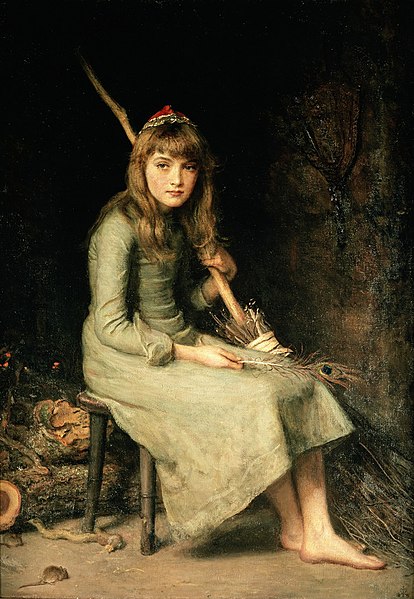
In the story of Tattercoats an old lord loses his daughter when she was birthing his grand daughter. He was so upset at the loss of his daughter that he swore to never look at his grandchild and he neglected her. The grandchild had a nurse maid that took care of her but was ultimately forced to live on the streets where she befriended a goose herder. In the end she makes it to a ball with the goose herder and the Prince falls in love with her even though she is poorly dressed. The goose herder then turns her tattered clothes into a beautiful dress. This story appealed to me because it is a different version of the all too popular Cinderella. I enjoyed this version because the Prince fell in love with her before she was beautifully clothed and I think it sends an important message about falling in love for personality rather than beauty. If I were to retell this story I would possibly tell it as if someone was telling their child a bedtime story. It could be really interesting to even tell the story from the perspective of this Cinderella but make it a retelling to her child about how she met the prince. In the retelling of the story I would probably go into more detail about the herder and rather than herding geese maybe he could herd something more familiar like sheep. This is not a major part of the story but I think it is more relatable if the characters are more familiar.

File:John Everett Millais - Cinderella.jpg
(Classic Cinderella, photo found at Wikipedia commons)

Bibliograph

More English Fairy Tales, Joseph Jacobs with illustrations by John D. Batten (1894) link

Wednesday, November 8, 2017

Reading Notes: Robin Hood B

Reading Notes: Robin Hood

As I stated in my last post, this week for the Celtic and British unit I chose to read about Robin Hood. Not only was this section different in the way it was written, it had very ideas of Robin Hood than I am used to. These ballads portray Robin Hood as more of a villain, which is very surprising. For the second part of this reading unit I found a few stories that could be interesting to rewrite. These include The Bishop of Hereford and The Bishop.

The Bishop of Hereford and The Bishop.

In The Bishop of Hereford Robin Hood disguises as a Shepherd and kills a deer in the Bishop's path so that the Bishop would condemn him for killing the King's deer. When this happens Robin calls for his men and they overtake the Bishop and steal his gold. In the story of The Bishop, the story of The Bishop of Hereford continues. After Robin Hood lets the Bishop run away after robbing him the Bishop gathers men and hunts down Robin Hood. Robin changes clothes with an old lady and tricks the Bishop into taking the wrong person. I think that it could be interesting to retell these two stories as one and to not do the traditional ballad form. Although the ballads are interesting they can be slightly hard to read and I would change it into a normal story. I could also tell it in first person from Robin's perspective or give a better backstory of the Bishop. If I were to retell these two stories as one I could also do a better job of describing the timeline between Robin robbing the bishop and the bishop hunting down Robin. Another idea would be to tell the story as if it was someone telling their child a bedtime story.


File:Statue of Robin Hood in Sherwood Forest (9464).jpg
(Robin, Credit to Nilfanion, link)


Bibliography

The English and Scottish Popular Ballads,Francis James Child. (1882-1898) link

Reading Notes: Robin Hood A

Reading Notes: Robin Hood

This week for the British and Celtic Units I chose to read the Robin Hood section. I was torn between choosing Alice in Wonderland and Robin Hood, but since I plan to read the full Alice in Wonderland Novel I went with Robin Hood. In the reading I found a few stories that I would be interested in retelling, including Progress to Nottingham.

Progress to Nottingham

In the story Progress to Nottingham Robin is only 15 years old and is already skilled with a bow and arrow. The main idea of the story is that some foresters do not believe that Robin Hood could possibly be that skilled with a bow and arrow since he is so young and so they challenge him to shoot in the King's shooting competition. Robin Hood made a wager with the men and won, but when they did not pay up he shot them all. I was definitely surprised to see him more of a villain type rather than the steal from the rich to give to the poor image that he has been portrayed as. The story was also different because it was written in the form of a ballad in old English, which honestly made it a bit more difficult to read. If I were to retell the story I feel like I could go two different directions. On one hand, I could change the story so that instead of Robin Hood killing all of the men they could have paid up and he could have given the money to the poor. On the other hand, I could fully embrace the more villainous Robin Hood and retell this version of the story out of the ballad form.  I think if I were to keep the villainous version of Robin Hood I could go into more detail of why he was wondering the forest alone at fifteen years old.

File:Robin Hood statue, Nottingham Castle 1.jpg
(Young Robin, credit to Mike Peel)


Bibliography

The English and Scottish Popular Ballads,Francis James Child. (1882-1898) link

Friday, November 3, 2017

Reading Notes: Extra Credit, Nursery Rhymes

Reading Notes

For the extra credit reading I really wanted to read something that was different than everything I have seen up to this point. I have enjoyed exploring tales from Egypt, folklore from Native Americans, and fables from Africa, but I thought it would be fun to read something that may be more familiar. When I was little, I was read and sung many nursery rhymes, so it seemed like the Nursery Rhyme unit could be both familiar like Little Bo Peep and even surprising like The Lion and the Unicorn. 

Little Bo Peep

Little Bo Peep is a rhyme that I heard many times as a child and it is about a girl who has sheep that get lost, she seeks them out but when she found them they had no tails. I think it could be fun to retell this story from her perspective! This could be the origin story of Little Bo Peep.

The Lion and the Unicorn

One nursery rhyme that I was unfamiliar with was The Lion and the Unicorn. This short rhyme was about a lion and a unicorn fighting for the crown, and the lion beat the unicorn around a village. It seemed as though in the rhyme the villagers did not want their town being destroyed so they offered the lion and unicorn bread to leave. I think it would be fun to retell this story since I would have the opportunity to add so much to it. When I read this rhyme I thought of instead of a literal lion and unicorn it could mean two armies that have a lion and a unicorn as their banner. This of course reminded me of Game of Thrones and since I am such a nerd it would be amazing to add to the story of Game of Thrones. Maybe there is an old tale about a family, the unicorns, that aren't around anymore because the lions beat them so badly!

File:Belgium football lion crest.png
(Lion Crest, credit to Kareldorado, link)


Bibliography


The Nursery Rhyme Book, edited by Andrew Lang and Illustrated by L. Leslie Brooke.  link


Wednesday, November 1, 2017

Reading Notes: Alaskan Legends, A

Reading Notes: Alaskan Legends

This week I chose to finish off the Native American reading unit by reading about Alaskan Legends. Growing up in Oklahoma, I am more familiar with tales from the Plains Indians and I was really interested in reading stories from another region of the United States. Overall, I was really surprised at the emphasis these Alaskan Legends put on the raven. In the reading I enjoyed the story Raven and the Marmot

Raven and the Marmot

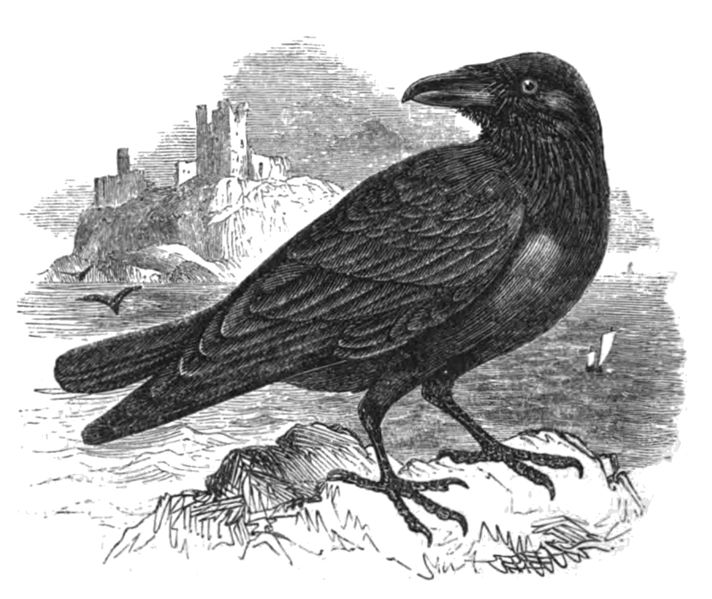
In the story Raven and the Marmot, the Raven was flying overhead when he saw the hole of a marmot. Wanting the eat the marmot, Raven blocked the hole so that when the marmot returned it would not be able to escape into its' home. The plan seemed to work because the marmot returned and could not hide in his hole, but the marmot had a plan. The marmot convinced Raven to dance so as a final request and asked the Raven to close its' eyes. The raven agreed and then the marmot jumped between the raven's legs and hid. I thought this was an interesting story because the Raven actually gets outsmarted even though in quite a few of the other stories the raven seems to be powerful and intelligent. If I were to retell the story I could put it in first person for either the raven or the marmot. I could also change them from animals to humans and make the raven a true villain wanting to kidnap the marmot or something along those lines. I also think that it would be interesting to add more details to the story in order to give a better description of the setting since in the original there was relatively no description of the surroundings, time, or origins of the raven or marmot.


File:Natural History, Birds - Raven.jpg
(Raven, credit to Philip Henry Gosse)

Bibliography

Myths and Legends of Alaska, edited by Katharine Berry Judson (1911). link