Showing posts with label Reading Notes. Show all posts

Wednesday, November 15, 2017

Reading Notes: More English Fairy Tales B

Reading Notes

As I stated in my last post, I really wanted to read the More English Fairy Tales section of the British and Celtic unit in order to find inspiration for the retelling of a fairy tale since my portfolio does have the term fairy tale in the title. Anyways, in the second part of the reading I really enjoyed the story Rushen Coatie as well as King O' Cats.


Rushen Coatie

The story of Rushen Coatie is yet another retelling of the classic Cinderella story. In this version the fairy godmother is a calf that helps Cinderella, or the Rushen Coatie, get food as well as clothes to attend church where she meets the prince. Like the other classic Cinderella stories, the Rushen Coatie loses a shoe at church in a rush to beat her evil stepmother home and the Prince searches for the owner of the shoe. This version was a bit more gruesome because the  stepmother actually cut off the toes of one of her daughters so that the shoe would fit. If I were to retell this story I may keep some classic aspects like the shoe and the wishes but I might change how the story is written. I could tell the story from a first person perspective or I could do a complete perspective change and tell the story from the side of the actual daughter. Maybe she disagrees with her evil mother and could try to help the Rushen Coatie but in the end gets her toes cut off. 

The King O' Cats

The King O' Cats is not a typical or well known fairy tale but I really enjoyed reading it. The story was about a man who works in a graveyard and saw a funeral for a cat by cats and was freaked out. When he is retelling the story to his wife, who has a cat on her lap, the cat jumps up and shouts that he is the King of the Cats now and runs off. If I were to retell this story I may go into more detail on this secret cat community and maybe even form the story into a comedy about the cats trying to cover up what the old man saw in order to keep their society secret.
(King of Cats, photo from flickr)


Bibliography

More English Fairy Tales, Joseph Jacobs with illustrations by John D. Batten (1894) link


Reading Notes: More English Fairy Tales A

Reading Notes


For this week's reading in the British and Celtic unit I chose to read the unit over more English Fairy Tales. The title of my portfolio is Fables, Fairy tales, and other Fantastic Stories so I feel like I needed to read about fairy tales to potentially write a story about a fairy tale. The story Tattercoats was one story that I really enjoyed reading and that I could see myself retelling.

Tattercoats

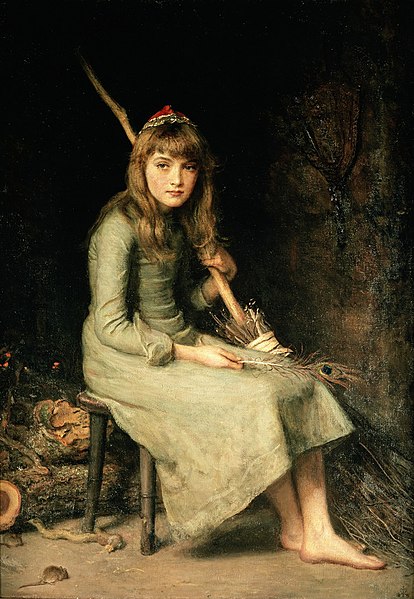
In the story of Tattercoats an old lord loses his daughter when she was birthing his grand daughter. He was so upset at the loss of his daughter that he swore to never look at his grandchild and he neglected her. The grandchild had a nurse maid that took care of her but was ultimately forced to live on the streets where she befriended a goose herder. In the end she makes it to a ball with the goose herder and the Prince falls in love with her even though she is poorly dressed. The goose herder then turns her tattered clothes into a beautiful dress. This story appealed to me because it is a different version of the all too popular Cinderella. I enjoyed this version because the Prince fell in love with her before she was beautifully clothed and I think it sends an important message about falling in love for personality rather than beauty. If I were to retell this story I would possibly tell it as if someone was telling their child a bedtime story. It could be really interesting to even tell the story from the perspective of this Cinderella but make it a retelling to her child about how she met the prince. In the retelling of the story I would probably go into more detail about the herder and rather than herding geese maybe he could herd something more familiar like sheep. This is not a major part of the story but I think it is more relatable if the characters are more familiar.

File:John Everett Millais - Cinderella.jpg
(Classic Cinderella, photo found at Wikipedia commons)

Bibliograph

More English Fairy Tales, Joseph Jacobs with illustrations by John D. Batten (1894) link
Wednesday, November 8, 2017

Reading Notes: Robin Hood B

Reading Notes: Robin Hood

As I stated in my last post, this week for the Celtic and British unit I chose to read about Robin Hood. Not only was this section different in the way it was written, it had very ideas of Robin Hood than I am used to. These ballads portray Robin Hood as more of a villain, which is very surprising. For the second part of this reading unit I found a few stories that could be interesting to rewrite. These include The Bishop of Hereford and The Bishop.

The Bishop of Hereford and The Bishop.

In The Bishop of Hereford Robin Hood disguises as a Shepherd and kills a deer in the Bishop's path so that the Bishop would condemn him for killing the King's deer. When this happens Robin calls for his men and they overtake the Bishop and steal his gold. In the story of The Bishop, the story of The Bishop of Hereford continues. After Robin Hood lets the Bishop run away after robbing him the Bishop gathers men and hunts down Robin Hood. Robin changes clothes with an old lady and tricks the Bishop into taking the wrong person. I think that it could be interesting to retell these two stories as one and to not do the traditional ballad form. Although the ballads are interesting they can be slightly hard to read and I would change it into a normal story. I could also tell it in first person from Robin's perspective or give a better backstory of the Bishop. If I were to retell these two stories as one I could also do a better job of describing the timeline between Robin robbing the bishop and the bishop hunting down Robin. Another idea would be to tell the story as if it was someone telling their child a bedtime story.


File:Statue of Robin Hood in Sherwood Forest (9464).jpg
(Robin, Credit to Nilfanion, link)


Bibliography

The English and Scottish Popular Ballads,Francis James Child. (1882-1898) link

Reading Notes: Robin Hood A

Reading Notes: Robin Hood

This week for the British and Celtic Units I chose to read the Robin Hood section. I was torn between choosing Alice in Wonderland and Robin Hood, but since I plan to read the full Alice in Wonderland Novel I went with Robin Hood. In the reading I found a few stories that I would be interested in retelling, including Progress to Nottingham.

Progress to Nottingham

In the story Progress to Nottingham Robin is only 15 years old and is already skilled with a bow and arrow. The main idea of the story is that some foresters do not believe that Robin Hood could possibly be that skilled with a bow and arrow since he is so young and so they challenge him to shoot in the King's shooting competition. Robin Hood made a wager with the men and won, but when they did not pay up he shot them all. I was definitely surprised to see him more of a villain type rather than the steal from the rich to give to the poor image that he has been portrayed as. The story was also different because it was written in the form of a ballad in old English, which honestly made it a bit more difficult to read. If I were to retell the story I feel like I could go two different directions. On one hand, I could change the story so that instead of Robin Hood killing all of the men they could have paid up and he could have given the money to the poor. On the other hand, I could fully embrace the more villainous Robin Hood and retell this version of the story out of the ballad form.  I think if I were to keep the villainous version of Robin Hood I could go into more detail of why he was wondering the forest alone at fifteen years old.

File:Robin Hood statue, Nottingham Castle 1.jpg
(Young Robin, credit to Mike Peel)


Bibliography

The English and Scottish Popular Ballads,Francis James Child. (1882-1898) link

Friday, November 3, 2017

Reading Notes: Extra Credit, Nursery Rhymes

Reading Notes

For the extra credit reading I really wanted to read something that was different than everything I have seen up to this point. I have enjoyed exploring tales from Egypt, folklore from Native Americans, and fables from Africa, but I thought it would be fun to read something that may be more familiar. When I was little, I was read and sung many nursery rhymes, so it seemed like the Nursery Rhyme unit could be both familiar like Little Bo Peep and even surprising like The Lion and the Unicorn. 

Little Bo Peep

Little Bo Peep is a rhyme that I heard many times as a child and it is about a girl who has sheep that get lost, she seeks them out but when she found them they had no tails. I think it could be fun to retell this story from her perspective! This could be the origin story of Little Bo Peep.

The Lion and the Unicorn

One nursery rhyme that I was unfamiliar with was The Lion and the Unicorn. This short rhyme was about a lion and a unicorn fighting for the crown, and the lion beat the unicorn around a village. It seemed as though in the rhyme the villagers did not want their town being destroyed so they offered the lion and unicorn bread to leave. I think it would be fun to retell this story since I would have the opportunity to add so much to it. When I read this rhyme I thought of instead of a literal lion and unicorn it could mean two armies that have a lion and a unicorn as their banner. This of course reminded me of Game of Thrones and since I am such a nerd it would be amazing to add to the story of Game of Thrones. Maybe there is an old tale about a family, the unicorns, that aren't around anymore because the lions beat them so badly!

File:Belgium football lion crest.png
(Lion Crest, credit to Kareldorado, link)


Bibliography


The Nursery Rhyme Book, edited by Andrew Lang and Illustrated by L. Leslie Brooke.  link


Wednesday, November 1, 2017

Reading Notes: Alaskan Legends, A

Reading Notes: Alaskan Legends

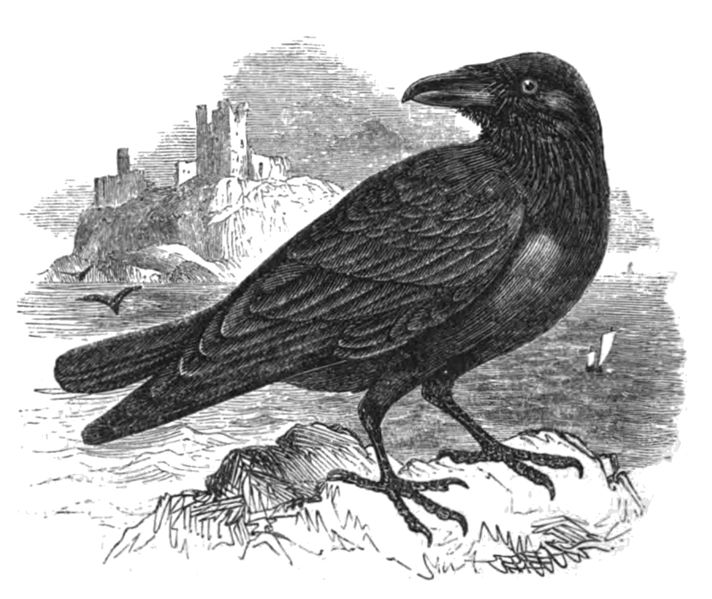
This week I chose to finish off the Native American reading unit by reading about Alaskan Legends. Growing up in Oklahoma, I am more familiar with tales from the Plains Indians and I was really interested in reading stories from another region of the United States. Overall, I was really surprised at the emphasis these Alaskan Legends put on the raven. In the reading I enjoyed the story Raven and the Marmot

Raven and the Marmot

In the story Raven and the Marmot, the Raven was flying overhead when he saw the hole of a marmot. Wanting the eat the marmot, Raven blocked the hole so that when the marmot returned it would not be able to escape into its' home. The plan seemed to work because the marmot returned and could not hide in his hole, but the marmot had a plan. The marmot convinced Raven to dance so as a final request and asked the Raven to close its' eyes. The raven agreed and then the marmot jumped between the raven's legs and hid. I thought this was an interesting story because the Raven actually gets outsmarted even though in quite a few of the other stories the raven seems to be powerful and intelligent. If I were to retell the story I could put it in first person for either the raven or the marmot. I could also change them from animals to humans and make the raven a true villain wanting to kidnap the marmot or something along those lines. I also think that it would be interesting to add more details to the story in order to give a better description of the setting since in the original there was relatively no description of the surroundings, time, or origins of the raven or marmot.


File:Natural History, Birds - Raven.jpg
(Raven, credit to Philip Henry Gosse)

Bibliography

Myths and Legends of Alaska, edited by Katharine Berry Judson (1911). link

Tuesday, October 24, 2017

Reading Notes: Pacific Northwest B

Reading Notes: B


As I stated in the last reading notes blog for week 10, this week I have chosen to read stories from Pacific Northwest Native American Tribes. For the second half of the reading I found a one story that would be especially interesting to retell. This includes the story Chinook Ghost 

Chinook Ghost

The story Chinook Ghost is about how a ghost wanted a wife and so he bought the blue jay's sister and took her to the land of the dead. After many questions and much searching the blue jay found his sister and she was surrounded by skeletons. At night the skeletons came to life and were ghost. The blue jay became mischievous and played pranks on the ghost so they banished him. He ended up dying and when he returned to the land as a ghost everything was in pristine condition, unlike when he went to the land when he was alive. 

Since it is so close to Halloween I think that this story about ghost would be very fun to retell. If I were to retell this story I could go into more detail about how the land of the dead was as described by the blue jay when he was alive. It would be fun to use very vivid details to describe how the ghost came to life at night and how everything they used seem to be old and broken. This would make it even more interesting when he returns to the land when he is dead and everything seems to be working perfectly. Also it would be interesting to describe the story from the sister's perspective since she is the one that got taken to the land of the dead first. Also instead of starting the story with something as blunt as "the ghost wanted a wife," I could do a backstory on the ghost and the ghost lands.
(Ghost Forest, pixabay)


Bibliography

Myths and Legends of the Pacific Northwest, especially of Washington and Oregon. Katharine Berry Judson. (1910) link.

Reading Notes: Pacific Northwest

Reading Notes:

This week for the Native American unit I chose to read stories that originated from the Pacific Northwest.  I was particularly interested in the story How the Old Man Above Created the World, but I also enjoyed How Beaver Stole Fire.

How the Old Man Above Created the World

The story, How the Old Man Above Created the World, is the world creation story as told by the Shasta Indians of the Northwest. In this story the Old Man chisels his way through the sky and makes a pyramid of snow and ice to climb down to earth. The Old Man then planted trees and then made animals from the leaves and sticks of the tree. The Old Man then lives in a tee pee that is a mountain until the white men come and then he leaves. If I were to retell this story I do not think I would change too much of the basis of it, but instead focus on the details. When I read the story I thought of it as being very beautiful and mystical and it would be fun to go into extreme detail about the creation story. My favorite part of the original is when the Old Man blew on the leaf and it became a bird and I think that this type of lyrical detail could be further utilized to create some vivid images about the creation.
File:Sunrise on Mount Shasta.jpg
(Mount Shasta, credit to Michael Zanger, link)


How Beaver Stole Fire

The story, How Beaver Stole Fire, is based a long time ago when trees and animals could walk and speak like humans. The trees were in charge of holding fire and one cold winter the beaver stole the fire from the pines so that he would not freeze. I think this story would be cool to retell because I would get to describe living trees. If I were to change anything I might tell the story from the perspective of the old ceder tree or even the beaver.


Bibliography

Myths and Legends of the Pacific Northwest, especially of Washington and Oregon. Katharine Berry Judson. (1910) link.

Thursday, October 19, 2017

Reading Notes: Stories from Congo, B

Reading Notes: Part B

For the second part of reading from Congo I had a hard time choosing a story that held my interest. I did not enjoy part B of the reading as much as part A but I still found a few stories that I could see myself rewriting.

The Fetish Sunga

In The Fetish Sunga, there is a great fisherman named Basa who goes to the river everyday to catch fish. Even though he catches many fish every day, he often lies about catching them because he is very selfish. One day, the fetish Sunga grows tired of his lies and invites him to a feast where she makes him mute so that he cannot lie again. If I were to rewrite this story I think it would be interesting to explain what happens to Basa after he becomes mute. When I was reading the story I was wondering if after he became mute did he continue to hide his fish, or did he learn his lesson and begin to share. I think it would be exciting to explain how he learns his lesson and maybe make him return to the fetish to ask for forgiveness.
File:Fisherman.s struggle.JPG
(Fisherman, link)


Why The Crocodile does not Eat the Hen

In Why the Crocodile does not Eat the Hen, there is a crocodile that tries to eat a  hen every day. Every day as he approaches the hen she calls him brother and this greatly confuses him. One day he finally has to ask Mbambi why the hen keeps calling him brother and he responds that the hen is a duck and the duck loves the water and lays eggs so they are brothers. If I were to retell this story I would focus more on the dialogue between the duck and the crocodile. I think it would be more interesting if the crocodile confronts the duck rather than going to a friend to ask.


Bibliography

Notes on the Folklore of the Fjort, Richard Edward Dennett (1898). link


Monday, October 16, 2017

Reading Notes: Stories from Congo, A

Reading Notes:

This week I read through Stories From Congo and found a few stories that I could retell this week. The stories include How the Wives Restored their Husband to Life, and Another Vanishing Wife.

How the Wives Restored their Husband to Life

In the original story of How the Wives Restored their Husband to Life, three wives each had a gift. The gifts were to dream, to guide, and the bring back to life. When the husband was killed hunting the dreamer dreamed of his death, the guide found a way to his body, and the life giver brought him back to life. I feel as though if I were to retell this story I could switch the husband to a woman and perhaps make the women gifted sisters.  The new addition would have the gift of being a skilled huntress. Instead of choosing a best gift, in my version I could put an emphasis on the importance of each gift and how they worked together.


Another Vanishing Wife

In the original story of Another Vanishing Wife a scrawny young man was tired of being put second to his strong older brother and being mistreated by his family. In response to this he ran away and found a magic canoe that led him to  magical tree in which he pulled a leaf off and it turned into a beautiful woman. The woman changed his appearance and awarded him with wealth and love. The man went against her warning and went to show off to his family. When he did this he lost the wife and his wealth. If I were to retell this story I would put an emphasis on the moral of the story; it is not necessary to impress people who do not care for you. It would be interesting to tell this story from the perspective of the man and to describe how he felt like he had something to prove.

File:Congo, canoe, model in the Vatican Museums-2.jpg
(The Magic Canoe, link)


Bibliography


Notes on the Folklore of the Fjort, Richard Edward Dennett (1898). Link

Wednesday, October 4, 2017

Reading Notes: Japanese Fairy-Tales B

Reading Notes B

For part B of the Japanese Fairy-Tales unit I found the most interesting story to be the story of Uraschimataro and the Turtle. In this story a talented young fisherman catches a sea turtle and after it begs for release he kindly places the turtle back in the sea. Years later, the fisherman was caught in the storm and almost dies when his boat is sunk but the turtle he once saved saves him. Instead of taking him home the turtle takes him to an underwater kingdom where he meets with a sea princess and stays with her for years without aging. When he decides to visit his parents he finds them dead as 300 years have passed and the years quickly catch up with him and he dies too. If I were to rewrite this story I may make the princess a mermaid since this story vaguely reminds me of The Little Mermaid. Also, I might go into more detail on where the young man originally lived and the changes that had occurred after 300 years. Maybe there would be cars or machines that he does not recognize and this could make him run back to the sea.
File:Hawksbill Sea Turtle Carey de Concha (5840602412).jpg
(Sea Turtle, photo credit to Carey de Concha at Wikipedia commons)

The other story I would consider rewriting is the story of Schippeitaro. In this story a young man is trying to prove that he is brave when he learns about a young woman doomed to be sacrificed to the cat demon of the mountain. When he hears of this he asks a prince to borrow his dog, Schippeitaro, and the dog kills the cat demon. If I were to rewrite the story I may make the dog the boys dog so that he gets to keep him in the end. Also, I may do a gender swap and try to make a young woman try to prove her bravery instead of a young man.


Bibliography

The Crimson Fairy Book, Andrew Lang and illustrated by H.J. Ford (1903.

Tuesday, October 3, 2017

Reading Notes: Japanese Fairy Tales A

Reading Notes


This week I chose to read Japanese Fairy Tales for my reading notes, and found a few that I really enjoyed. The first story that I was surprised to see was the Story of the Stone-Cutter. This story was extraordinarily similar to the first story I read in this course, The Man in the Moon. Although they are both stories about transformation that originated in Asia, the stone-cutter story was very different in the sense that the man ended up as what he was originally. I think it could be really interesting to retell this story since I have already told a similar story with a different end. Perhaps in this story the stone-cutter could have heard the tale of The Man, The Moon and sought out the wise woman to transform him so that he could have a happier life. It would be fun to tell the story in a similar way, but rather than make the stone-cutter end up as something else have the wise woman teach him the lesson of appreciating what you already have.

Colour print of a mountain
(Japanese Mountain, Katsushika Hokusai)

The other story I really enjoyed from this week was the story of The Maiden With the Wooden Helmet. In this story a beautiful young woman is taught the value of work and her mom advises her to wear a wooden helmet to hide her beauty so she is appreciated for her work. When a young man sees the beautiful girl he falls in love and when he finally convinces her to marry him she cannot remove the helmet. The young man does not care and still wishes to marry the beautiful girl, and after the wedding the helmet turns to jewels. I feel like telling this story would be great because it has an important message. If I were to retell the story I may retell it from the young man's perspective and explain how he appreciates her work ethic and does not care what she looks like.


Bibliography

The Crimson Fairy Book by Andrew Lang and illustrated by H. J. Ford (1903).

Wednesday, September 27, 2017

Reading Notes: Arabian Nights A

Reading Notes: Arabian Nights A

This week I was so excited to read Tales from Arabian Nights, since it is already a topic I am interested in. In fact, my topic brainstorm post describes how I own a personal copy of Tales from the Arabian Nights and would be interested in retelling the story of Aladdin and the Magical Lamp. Since the Aladdin and the Magical Lamp stories are in part B of the reading, I found a few different stories that would be interesting to retell. Since all of these stories seem to be stories within stories I think it would be best to combine the story of Sheherazade with another one of the sub-stories. The story of Sheherezade describes how a young woman. Sheherezade, is destined to be put to death in the morning by a bitter sultan so she must devise a plan to save her own life. Sheherezade ends up telling a story soon before she is supposed to be put to death and the Sultan is so intrigued that he grants her life for another day so that he can hear the end of the story the next evening. Each night Sheherezade continues telling stories, and each time a new character from the story she is telling has another tale to tell. This is what causes the "story within a story." Of the stories that she told, I really enjoyed the story of the Second Old Man and the Two Black Dogs. In this story an old man offers a story in to an angry genie in order to save a young man's life. The story is about a merchant who continually gives his brothers money because he is more successful  and eventually they scheme to kill him for his riches. The old man unknowingly marries a fairy and the fairy turns the brothers into dogs to to punish them for plotting the death of the nice older brother. Although I enjoyed the story, if I were to retell it I would go into more detail on the fairy and the role she played in turning the brothers into dogs.


(Arabian Nights, my personal copy)


Bibliography


The Arabian Nights' Entertainments, Andrew Lang and Illustrated by H.J. Ford

Wednesday, September 20, 2017

Reading Notes: Ancient Egypt B

Reading Notes:

The Book of Thoth:

File:Thoth.svg
(Thoth, Credit to Jeff Dahl)
The Book of Thoth is broken up into a few different stories that are all about a man named Nefer-ka-ptah. Nefer-ka-ptah was an avid reader of ancient script and searched for the Book of Thoth in order to gain the knowledge and magic that it possessed. When he succeeded, Thoth became angry that his sacred book was stolen and convinced Ra to kill Nefer-ka-ptah and his wife and his child. In this version of the story I was surprised at the amount of anger and vengeance that Thoth possessed after his book was stolen. I thought it was very cruel that he killed Neger-ka-ptah's entire family. I feel as though it could be interesting to tell this story from Thoth's perspective and give more reasoning on why the book is so important to him. In accordance to this, it could be intriguing to see Nefer-ka-ptah as a villain.


The Tale of King Rhampsinitus:

The Tale of King Rhampsinitus was probably my favorite story from section B of the readings over Ancient Egyptian mythology. This story was about a man and his brother who were told the secret entrance into the King's treasure room. The brothers stole all of the treasure from the King, but one night one of the brothers got caught and killed. The brother went to recover his brother's body and was so stealthy and cunning that the King promised to pardon him if he came forward. In my opinion, the story was a little gruesome when the man had to cut off his brother's head, and if I were to rewrite this story I definitely would not include that. In fact, I may not include the brother at all in the story and make the man even more clever and cunning. Another way I could change the story is to not include the part where the man was told the secret entry, but rather have him think of an ingenious plan to get in undetected.


Bibliography:

Egyptian Myth and Legend, Donald Mackenzie, link


Monday, September 18, 2017

Reading Notes: Ancient Egypt A

Reading Notes: 

Secret Name of Ra 

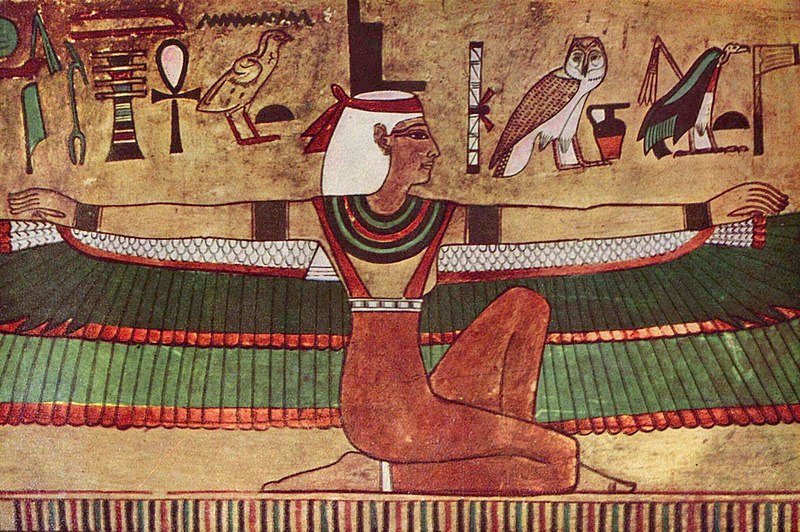
When researching topics for my project, I was very intrigued by the stories of Egyptian Goddesses and even made them the focus of my topic research blog. Isis, being an intelligent trickster, is definitely one of my favorite Goddesses so I greatly enjoyed the Secret Name of Ra. When reading this version of the story in which Isis tricks Ra into telling her his all-powerful secret name, I really appreciated the emphasis on Isis' intelligence and cunning. If I were to retell this story I feel as though Isis needs a definite reason wanting the powerful name. In my research about Isis, there was a similar story that described how Isis wanted the powerful name to save the people of Egypt from the wrath of her jealous brother Typhon. In my opinion, giving Isis a definite motivation for wanting the power would make her a more dynamic and relatable character. 

The Death of Osiris:

In the Death of Osiris, Osiris is killed by his jealous brother Set (a god similar to Typhon) and Set rules over Egypt. I think that this story would give Isis the perfect motivation for wanting the all-powerful secret name of Ra to save the people and to get revenge against Set.  When I do my storytelling, I would really like to incorporate both of these stories into one. The story could start with Isis and Osiris happily ruling Egypt, but then Set or Typhon becoming jealous of how the people love Isis and Osiris and how they love each other. When Set or Typhon kill Osiris in order to take the throne of Egypt, Isis could start devising a plan to trick Ra into giving her his powerful secret name so that she can gain the throne from the evil gods of destruction and monsters. 
I am excited to retell this story!

File:Ägyptischer Maler um 1360 v. Chr. 001.jpg
(Isis, Photo at Wikipedia Commons

Bibliography:

Egyptian Myth and Legend, Donald Mackenzie 

Wednesday, September 13, 2017

Reading Notes: Aesop's Fables (Jacobs, A)

Aesop's Fables (Jacobs)

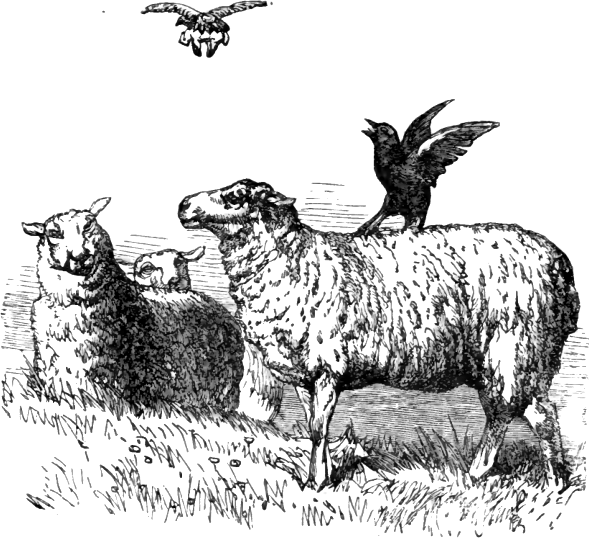
When I first started reading Aesop's Fables, I was very surprised that every one of them had a lesson even though they were each relatively short. One of the stories, and lessons, I enjoyed the most was The Wolf in Sheep's Clothing. The phrase "a wolf in sheep's clothing" is very familiar and immediately drew my attention while also making me wonder if this story could be the origin of that saying . After some research (here is the link), I found that Aesop lived in 600 B.C., and wrote many familiar stories that translate into common sayings. This included "a wolf in sheep's clothing." How cool! Anyways, the story was rather short and I feel that the lack of detail in the original opens the door to a different more creative approach. I have considered a few options for rewriting the story. First, it would be interesting to tell the story from the sheep's perspective and perhaps making the sheep smart enough to see through the disguise before he meets his untimely demise. On the other hand, telling the story from a villain's perspective could be something that I wouldn't usually do, and would be delightfully challenging. The idea for rewriting that I am most excited about is to really focus on the moral of the story; appearances are deceptive. Although it would appear that the wolf is only dressing up as a sheep to hunt his next meal, the truth could be that he is seeking companionship. After all, appearances are deceptive. 

Since many of these stories have a poem that go with them, I would be interested in attempting a short limerick to accompany my story. The Wolf in Sheep's Clothing did not have an accompanying limerick and my version would be different than the original, so it could be fun to spin a rhyme for my own version of the story with the same lesson.


File:Page 163 illustration to Three hundred Aesop's fables (Townshend).png
(Sheep of the Fable, Credit to Harrison Weir)


Bibliography

The Fables of Aesop, Joseph Jacobs
The Baby's Own Aesop, W.J. Linton and illustrated by Walter Crane (Link)