Wednesday, September 27, 2017

Reading Notes: Arabian Nights A

Reading Notes: Arabian Nights A

This week I was so excited to read Tales from Arabian Nights, since it is already a topic I am interested in. In fact, my topic brainstorm post describes how I own a personal copy of Tales from the Arabian Nights and would be interested in retelling the story of Aladdin and the Magical Lamp. Since the Aladdin and the Magical Lamp stories are in part B of the reading, I found a few different stories that would be interesting to retell. Since all of these stories seem to be stories within stories I think it would be best to combine the story of Sheherazade with another one of the sub-stories. The story of Sheherezade describes how a young woman. Sheherezade, is destined to be put to death in the morning by a bitter sultan so she must devise a plan to save her own life. Sheherezade ends up telling a story soon before she is supposed to be put to death and the Sultan is so intrigued that he grants her life for another day so that he can hear the end of the story the next evening. Each night Sheherezade continues telling stories, and each time a new character from the story she is telling has another tale to tell. This is what causes the "story within a story." Of the stories that she told, I really enjoyed the story of the Second Old Man and the Two Black Dogs. In this story an old man offers a story in to an angry genie in order to save a young man's life. The story is about a merchant who continually gives his brothers money because he is more successful  and eventually they scheme to kill him for his riches. The old man unknowingly marries a fairy and the fairy turns the brothers into dogs to to punish them for plotting the death of the nice older brother. Although I enjoyed the story, if I were to retell it I would go into more detail on the fairy and the role she played in turning the brothers into dogs.


(Arabian Nights, my personal copy)


Bibliography


The Arabian Nights' Entertainments, Andrew Lang and Illustrated by H.J. Ford

Thursday, September 21, 2017

Week Five Story: Isis and the Secret Name

Update:

Hello, and thanks for reading my story! This story can now be found in my portfolio at https://sites.google.com/view/sarahsportfolio/isis-and-the-secret-name.


Isis and the Secret Name

Our story began long ago, when the earth was still young and humanity was but a child. For years I watched through the heavens as the world of men fought starvation and disease, and for years the Gods did nothing. One day though, something was different. As I looked onto the the Earth I saw a God among men. Osiris was helping the men work the soil for food and build sturdy houses for shelter. My heart began to flutter, as I had long admired Osiris and his physical beauty but I was surprised to see him be so compassionate. I knew I had to go confess my admiration to him.

As soon as I stepped foot in Egypt the God immediately turned around and began to defend his work, as many God's did not believe it was their duty to help men. "I do not care what you say! I will not come back. The men need my help and....." Osiris fell silent as he saw me, curious thing about a man (even a god), they only shut up when they see something beautiful. 
"Hello, Osiris." I said "I have watched your good work and I wish to work alongside you to help these men." Osiris accepted my offer and over the years we established the great kingdom of Egypt. In this time Osiris and I fell deeply in love, and we were also awarded the love of the people.

This happy time went on for years, and my love for Osiris only grew. I admired that he was a kind and gentle leader, and the people of Egypt praised his good works. One dark day, this all changed. Osiris had a brother named Set, who was known for his destruction and violence. When he approached our door  I warned Osiris to be cautious, but in his kindness Osiris offered a home to Set in our kingdom. I immediately saw the jealousy on Set's face when he observed the love that Osiris had acquired from his people, so I went to the heavens to warn Ra of Set's violent tendency. Ra quickly sent me away, claiming that a Set had no foul intentions. 

By the time I arrived back in Egypt it was too late, Set had poisoned my one true love and had taken the throne for himself. I was immediately overcome with anger, but before I could attack the God of Destruction, one of my hand maidens pulled me back. "Wait!" she exclaimed. "Set is the master of destruction, and would surely defeat you in battle. You must find a better way to defeat him."  Even in my anger I understood that the maiden was correct, and began to devise a plan to defeat Set and save my people.

For days I found refuge in the desert, attempting to devise a plan to defeat the powerful Set. One day I was beginning to get discouraged. How could I possibly save my people when Set is so much stronger than I am? At that moment I saw a small desert viper bite a much larger fox, and I watched as the viper's poison slowly killed the larger animal. This gave me an idea! I caught the viper and enchanted it to be invisible, and gave it a magical venom that could only be cured by Ra himself. If I could get the viper to bite Ra, he would be too weak to heal himself and would have to tell me his all-powerful secret name so that I could heal him. 

The next day I traveled to the heavens to unleash my plan. I had put the viper in a decorative box and offered it to Ra in exchange for entrance back into the heavens. As soon as he open the box, the invisible viper bit the God and the God began to scream in agony. "Save me, Isis! Save me from this miserable end!" he yelled. Calmly I replied that in order to save him I needed his secret name, as only his power was strong enough to save him from the magic venom. In his agony, Ra agreed and whispered the secret name to me. With Ra's power I saved Ra and immediately flew back to Egypt to confront Set.

When I arrived, Set was sitting on my husband's throne. "This is your warning, Set. You have killed my love and abused my people. Leave this land or be destroyed!" Set laughed in my face and stood to me, clearly much larger and stronger. "Oh, Isis, you poor little bird. Without Osiris you are nothing, and without your people you have no purpose. Leave me or be killed like your weak husband."

Without a word I summoned the power of Ra and sent Set flying through the air. When he hit the ground, I used the power of the sun to burn Set until all that remained of him was dust. Although sad over the death of Osiris, my people were overjoyed to be free of the evil God.

With Set dead and my people saved, I then began to plan a way to bring Osiris back to life. But that, my friend,  is another story entirely. 
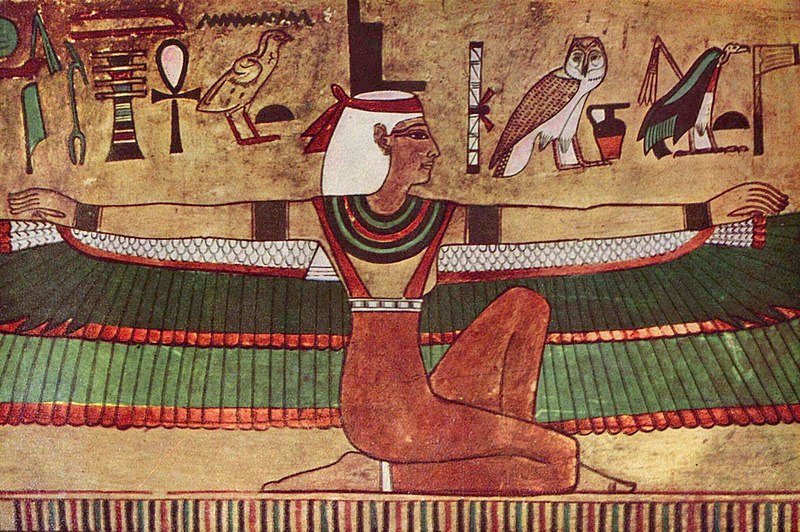
File:Ägyptischer Maler um 1360 v. Chr. 001.jpg
(Isis, photo at Wikipedia Commons)

Author's Note:

When doing the reading for this week, I really enjoyed both The Secret Name of Ra and The Death of Osiris. In the Secret Name of Ra, Isis is determined to find out the secret and all-powerful name of Ra in order to posses the power that accompanies it. She creates an invisible snake to bite Ra and as he is dying she convinces him that she can save him, but only if he shares with her the secret name. In sharing the name, Isis did save Ra and was able to possess the power that accompanies the name. In the Death of Osiris, Osiris (Isis' husband) was killed by his jealous brother Set. When Set begins to rule Egypt, Isis is forced to flee and finds shelter with a poor woman.  When I read these two stories I immediately thought that the death of Osiris could be the perfect motivation behind why Isis wants the powerful name. In combining these two stories I was hoping to make Isis a stronger and more dynamic character, being motivated out of love and compassion for her people as well as anger over the death of her husband.


Bibliography:

Egyptian Myth and Legend, Donald Mackenzie, link.

Wednesday, September 20, 2017

Reading Notes: Ancient Egypt B

Reading Notes:

The Book of Thoth:

File:Thoth.svg
(Thoth, Credit to Jeff Dahl)
The Book of Thoth is broken up into a few different stories that are all about a man named Nefer-ka-ptah. Nefer-ka-ptah was an avid reader of ancient script and searched for the Book of Thoth in order to gain the knowledge and magic that it possessed. When he succeeded, Thoth became angry that his sacred book was stolen and convinced Ra to kill Nefer-ka-ptah and his wife and his child. In this version of the story I was surprised at the amount of anger and vengeance that Thoth possessed after his book was stolen. I thought it was very cruel that he killed Neger-ka-ptah's entire family. I feel as though it could be interesting to tell this story from Thoth's perspective and give more reasoning on why the book is so important to him. In accordance to this, it could be intriguing to see Nefer-ka-ptah as a villain.


The Tale of King Rhampsinitus:

The Tale of King Rhampsinitus was probably my favorite story from section B of the readings over Ancient Egyptian mythology. This story was about a man and his brother who were told the secret entrance into the King's treasure room. The brothers stole all of the treasure from the King, but one night one of the brothers got caught and killed. The brother went to recover his brother's body and was so stealthy and cunning that the King promised to pardon him if he came forward. In my opinion, the story was a little gruesome when the man had to cut off his brother's head, and if I were to rewrite this story I definitely would not include that. In fact, I may not include the brother at all in the story and make the man even more clever and cunning. Another way I could change the story is to not include the part where the man was told the secret entry, but rather have him think of an ingenious plan to get in undetected.


Bibliography:

Egyptian Myth and Legend, Donald Mackenzie, link


Monday, September 18, 2017

Reading Notes: Ancient Egypt A

Reading Notes: 

Secret Name of Ra 

When researching topics for my project, I was very intrigued by the stories of Egyptian Goddesses and even made them the focus of my topic research blog. Isis, being an intelligent trickster, is definitely one of my favorite Goddesses so I greatly enjoyed the Secret Name of Ra. When reading this version of the story in which Isis tricks Ra into telling her his all-powerful secret name, I really appreciated the emphasis on Isis' intelligence and cunning. If I were to retell this story I feel as though Isis needs a definite reason wanting the powerful name. In my research about Isis, there was a similar story that described how Isis wanted the powerful name to save the people of Egypt from the wrath of her jealous brother Typhon. In my opinion, giving Isis a definite motivation for wanting the power would make her a more dynamic and relatable character. 

The Death of Osiris:

In the Death of Osiris, Osiris is killed by his jealous brother Set (a god similar to Typhon) and Set rules over Egypt. I think that this story would give Isis the perfect motivation for wanting the all-powerful secret name of Ra to save the people and to get revenge against Set.  When I do my storytelling, I would really like to incorporate both of these stories into one. The story could start with Isis and Osiris happily ruling Egypt, but then Set or Typhon becoming jealous of how the people love Isis and Osiris and how they love each other. When Set or Typhon kill Osiris in order to take the throne of Egypt, Isis could start devising a plan to trick Ra into giving her his powerful secret name so that she can gain the throne from the evil gods of destruction and monsters. 
I am excited to retell this story!

File:Ägyptischer Maler um 1360 v. Chr. 001.jpg
(Isis, Photo at Wikipedia Commons

Bibliography:

Egyptian Myth and Legend, Donald Mackenzie 

Sunday, September 17, 2017

Comment Wall

Portfolio Link:

https://sites.google.com/view/sarahsportfolio/home

Note from the Author:

Thank you for reading and commenting on my portfolio. I hope that you found at least one story enjoyable!

Wednesday, September 13, 2017

Reading Notes: Aesop's Fables (Jacobs, A)

Aesop's Fables (Jacobs)

When I first started reading Aesop's Fables, I was very surprised that every one of them had a lesson even though they were each relatively short. One of the stories, and lessons, I enjoyed the most was The Wolf in Sheep's Clothing. The phrase "a wolf in sheep's clothing" is very familiar and immediately drew my attention while also making me wonder if this story could be the origin of that saying . After some research (here is the link), I found that Aesop lived in 600 B.C., and wrote many familiar stories that translate into common sayings. This included "a wolf in sheep's clothing." How cool! Anyways, the story was rather short and I feel that the lack of detail in the original opens the door to a different more creative approach. I have considered a few options for rewriting the story. First, it would be interesting to tell the story from the sheep's perspective and perhaps making the sheep smart enough to see through the disguise before he meets his untimely demise. On the other hand, telling the story from a villain's perspective could be something that I wouldn't usually do, and would be delightfully challenging. The idea for rewriting that I am most excited about is to really focus on the moral of the story; appearances are deceptive. Although it would appear that the wolf is only dressing up as a sheep to hunt his next meal, the truth could be that he is seeking companionship. After all, appearances are deceptive. 

Since many of these stories have a poem that go with them, I would be interested in attempting a short limerick to accompany my story. The Wolf in Sheep's Clothing did not have an accompanying limerick and my version would be different than the original, so it could be fun to spin a rhyme for my own version of the story with the same lesson.


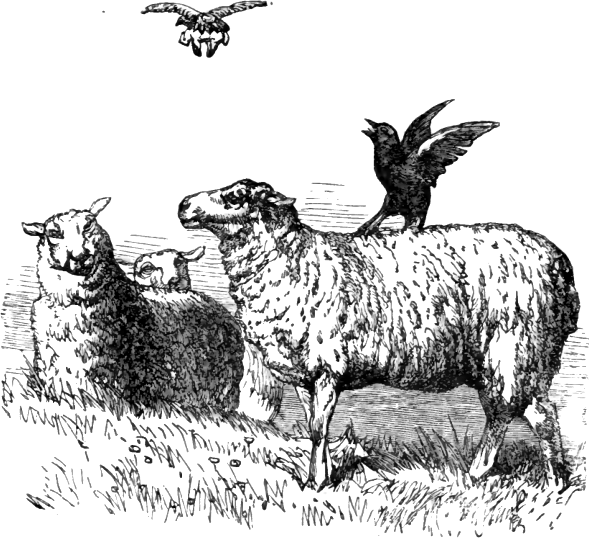
File:Page 163 illustration to Three hundred Aesop's fables (Townshend).png
(Sheep of the Fable, Credit to Harrison Weir)


Bibliography

The Fables of Aesop, Joseph Jacobs
The Baby's Own Aesop, W.J. Linton and illustrated by Walter Crane (Link)

Sunday, September 10, 2017

Topic Research: Egyptian Goddesses

Nut: Goddess of the Sky

Nut is in the creation story, as she is the sky goddess and the mother of famous god's and goddess's as Isis and Osiris. Nut is the arch that is the sky and touches both horizons. I think that it would be interesting to give her a bigger role in the creation story, and to give her a voice to describe what her duties are. 


File:Geb and Nut03.png
(Nut, The Arch of the Horizon. Credit to E.A. Wallis Budge at Wikipedia commons.)

Isis: Goddess of Earth

In the story of Isis and Osiris, Isis and Osiris were the first of the god's born from Nut, goddess of creation and motherhood. Isis and Osiris immediately fell in love, but Typhon the God of monsters was jealous of their beauty and love. Typhon came to Earth and began to acquire followers and cause war in the lands of Isis and Osiris.  Isis created a plan and tricked the God of all to tell her his name, and used the name to save her people. This condensed version of this story is in the Untextbook.

Hathor: Goddess of Joy

When rebellious words were spoken against Nu, the eldest god, he gathered the gods and goddesses to gather their opinions. It was suggested that the gods must take up arms against the humans, and Hathor  was the goddess in charge of the slaughter. When Ra saw the destruction Hathor was capable of, he ordered an end to the slaughter. In the end, Hathor was returned to a peaceful state. This story is from the Untextbook.