Wednesday, September 20, 2017

Reading Notes: Ancient Egypt B

Reading Notes:

The Book of Thoth:

File:Thoth.svg
(Thoth, Credit to Jeff Dahl)
The Book of Thoth is broken up into a few different stories that are all about a man named Nefer-ka-ptah. Nefer-ka-ptah was an avid reader of ancient script and searched for the Book of Thoth in order to gain the knowledge and magic that it possessed. When he succeeded, Thoth became angry that his sacred book was stolen and convinced Ra to kill Nefer-ka-ptah and his wife and his child. In this version of the story I was surprised at the amount of anger and vengeance that Thoth possessed after his book was stolen. I thought it was very cruel that he killed Neger-ka-ptah's entire family. I feel as though it could be interesting to tell this story from Thoth's perspective and give more reasoning on why the book is so important to him. In accordance to this, it could be intriguing to see Nefer-ka-ptah as a villain.


The Tale of King Rhampsinitus:

The Tale of King Rhampsinitus was probably my favorite story from section B of the readings over Ancient Egyptian mythology. This story was about a man and his brother who were told the secret entrance into the King's treasure room. The brothers stole all of the treasure from the King, but one night one of the brothers got caught and killed. The brother went to recover his brother's body and was so stealthy and cunning that the King promised to pardon him if he came forward. In my opinion, the story was a little gruesome when the man had to cut off his brother's head, and if I were to rewrite this story I definitely would not include that. In fact, I may not include the brother at all in the story and make the man even more clever and cunning. Another way I could change the story is to not include the part where the man was told the secret entry, but rather have him think of an ingenious plan to get in undetected.


Bibliography:

Egyptian Myth and Legend, Donald Mackenzie, link


Monday, September 18, 2017

Reading Notes: Ancient Egypt A

Reading Notes: 

Secret Name of Ra 

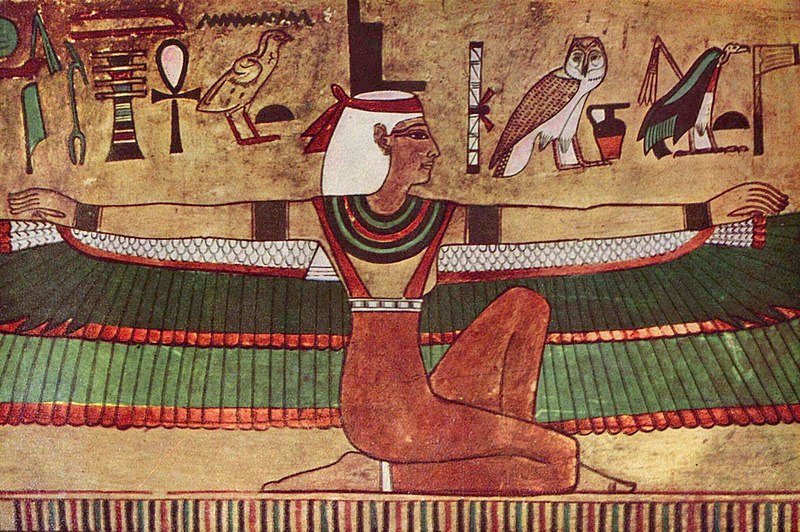
When researching topics for my project, I was very intrigued by the stories of Egyptian Goddesses and even made them the focus of my topic research blog. Isis, being an intelligent trickster, is definitely one of my favorite Goddesses so I greatly enjoyed the Secret Name of Ra. When reading this version of the story in which Isis tricks Ra into telling her his all-powerful secret name, I really appreciated the emphasis on Isis' intelligence and cunning. If I were to retell this story I feel as though Isis needs a definite reason wanting the powerful name. In my research about Isis, there was a similar story that described how Isis wanted the powerful name to save the people of Egypt from the wrath of her jealous brother Typhon. In my opinion, giving Isis a definite motivation for wanting the power would make her a more dynamic and relatable character. 

The Death of Osiris:

In the Death of Osiris, Osiris is killed by his jealous brother Set (a god similar to Typhon) and Set rules over Egypt. I think that this story would give Isis the perfect motivation for wanting the all-powerful secret name of Ra to save the people and to get revenge against Set.  When I do my storytelling, I would really like to incorporate both of these stories into one. The story could start with Isis and Osiris happily ruling Egypt, but then Set or Typhon becoming jealous of how the people love Isis and Osiris and how they love each other. When Set or Typhon kill Osiris in order to take the throne of Egypt, Isis could start devising a plan to trick Ra into giving her his powerful secret name so that she can gain the throne from the evil gods of destruction and monsters. 
I am excited to retell this story!

File:Ägyptischer Maler um 1360 v. Chr. 001.jpg
(Isis, Photo at Wikipedia Commons

Bibliography:

Egyptian Myth and Legend, Donald Mackenzie 

Sunday, September 17, 2017

Comment Wall

Portfolio Link:

https://sites.google.com/view/sarahsportfolio/home

Note from the Author:

Thank you for reading and commenting on my portfolio. I hope that you found at least one story enjoyable!

Wednesday, September 13, 2017

Reading Notes: Aesop's Fables (Jacobs, A)

Aesop's Fables (Jacobs)

When I first started reading Aesop's Fables, I was very surprised that every one of them had a lesson even though they were each relatively short. One of the stories, and lessons, I enjoyed the most was The Wolf in Sheep's Clothing. The phrase "a wolf in sheep's clothing" is very familiar and immediately drew my attention while also making me wonder if this story could be the origin of that saying . After some research (here is the link), I found that Aesop lived in 600 B.C., and wrote many familiar stories that translate into common sayings. This included "a wolf in sheep's clothing." How cool! Anyways, the story was rather short and I feel that the lack of detail in the original opens the door to a different more creative approach. I have considered a few options for rewriting the story. First, it would be interesting to tell the story from the sheep's perspective and perhaps making the sheep smart enough to see through the disguise before he meets his untimely demise. On the other hand, telling the story from a villain's perspective could be something that I wouldn't usually do, and would be delightfully challenging. The idea for rewriting that I am most excited about is to really focus on the moral of the story; appearances are deceptive. Although it would appear that the wolf is only dressing up as a sheep to hunt his next meal, the truth could be that he is seeking companionship. After all, appearances are deceptive. 

Since many of these stories have a poem that go with them, I would be interested in attempting a short limerick to accompany my story. The Wolf in Sheep's Clothing did not have an accompanying limerick and my version would be different than the original, so it could be fun to spin a rhyme for my own version of the story with the same lesson.


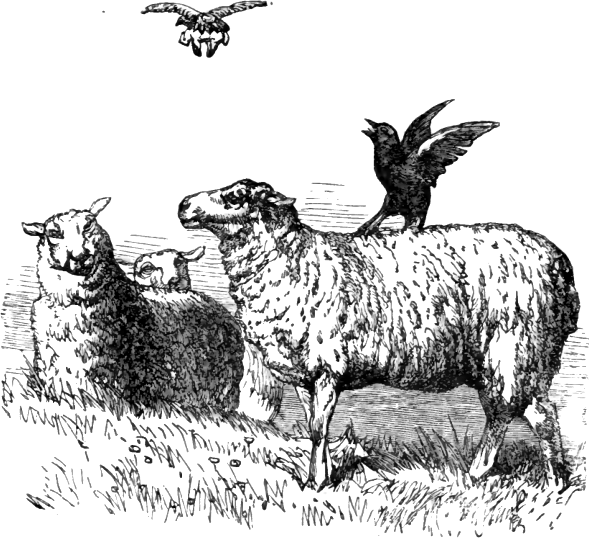
File:Page 163 illustration to Three hundred Aesop's fables (Townshend).png
(Sheep of the Fable, Credit to Harrison Weir)


Bibliography

The Fables of Aesop, Joseph Jacobs
The Baby's Own Aesop, W.J. Linton and illustrated by Walter Crane (Link)

Sunday, September 10, 2017

Topic Research: Egyptian Goddesses

Nut: Goddess of the Sky

Nut is in the creation story, as she is the sky goddess and the mother of famous god's and goddess's as Isis and Osiris. Nut is the arch that is the sky and touches both horizons. I think that it would be interesting to give her a bigger role in the creation story, and to give her a voice to describe what her duties are. 


File:Geb and Nut03.png
(Nut, The Arch of the Horizon. Credit to E.A. Wallis Budge at Wikipedia commons.)

Isis: Goddess of Earth

In the story of Isis and Osiris, Isis and Osiris were the first of the god's born from Nut, goddess of creation and motherhood. Isis and Osiris immediately fell in love, but Typhon the God of monsters was jealous of their beauty and love. Typhon came to Earth and began to acquire followers and cause war in the lands of Isis and Osiris.  Isis created a plan and tricked the God of all to tell her his name, and used the name to save her people. This condensed version of this story is in the Untextbook.

Hathor: Goddess of Joy

When rebellious words were spoken against Nu, the eldest god, he gathered the gods and goddesses to gather their opinions. It was suggested that the gods must take up arms against the humans, and Hathor  was the goddess in charge of the slaughter. When Ra saw the destruction Hathor was capable of, he ordered an end to the slaughter. In the end, Hathor was returned to a peaceful state. This story is from the Untextbook.

Friday, September 8, 2017

Feedback Strategies

General Thoughts on Feedback:

In my last feedback post, Feedback Thoughts, I spoke about how over the summer I did some job shadowing with a drilling company in Houston and they were trying to implement an anonymous feedback system. The most important part of the feedback system, according to the H.R. representative, was that the employees take it seriously and give honest feedback. This being said, my personal opinion on feedback is the same as the H.R. representative; in order to be helpful it must be taken seriously and be completely honest. Giving feedback can be difficult, since I always worry about offending someone, but I have found that being critical and honest is not the same thing as being mean.

Thoughts on Feedback Articles:

When choosing an article, I was immediately interested in How to Craft Constructive Feedback, by Laura Gibbs. I think the 3 step system to observe, describe, and suggest will be a very useful format to follow in the future when I am giving feedback to evaluate a performance. This is because in my potential career, the purpose of the feedback will not be focused on self expression, but rather performance.

I also found the article Specific Feedback that Helps Learning , by Justin Chando to be very helpful and informative. Although the article is directed to help a teacher give feedback to a student, I think the overall concepts will help me in this class as well as in the future. As the article states, great feedback gives a path to a better future, no matter what is being critiqued, so it is important to give specific advice that could act as a guide. Another piece of advice I thought was important was to be honest and transparent, in order for the feedback to be relevant and useful. 

(Feedback, Loud and Clear. Credit to geralt at pixabay)

Wednesday, September 6, 2017

Week 3 Story: Noah and the Giant


Noah and the Giant

Long ago, there was a man named Noah who was spoken to by God himself. God had told Noah that a great flood was coming to the earth and that he must build an ark in order to save a pair of each of the animals of the world. After years of preparation, the time of the flood was near and Noah had gathered pairs of all the animals of the earth except the unicorn. As the rain started to fall, a pair of giants the size of a mountains approached the Ark. Scared for the animals and the ark, Noah ran to meet the giants to see why they were approaching. "Why are you here, giants? " shouted Noah, "You are  both tall enough to withstand the flood and would not fit on my ark anyways!" The male giant boomed a response "It is not the water we fear, as we will be taller than the flood. We fear that we will not be able to find food when the water wipes out the animals and plants. We wish to make a trade." "What trade?" Noah asked. "We see that you have failed to acquire a unicorn for your ark. If you will give us food during the flood we will bring you a unicorn and promise not to harm you, your people or your ark." Noah thought for a moment before agreeing to the trade.

A night passed and the waters slowly started to rise, and Noah thought that the giants had failed to find a unicorn. As soon as Noah started to close the doors of the ark he heard the booming voice of the giant, "Wait!, we have found for you the last unicorn, and our deal is complete." Noah thanked them for keeping their part of the deal and every day of the flood he gave the giants some of the food stored on the ark. When the flood had finally ended, Noah and the animals left the ark to find an empty land. Noah immediately started to plant new crops for the future but the giants were disappointing at the barren land. In anger, the male giant wrecked the progress that Noah had made, breaking his promise not to harm Noah's people or anything on the ark. Noah approached the giants and said "You have broken your promise and must be exiled for your sins, if you ever come back I will use the strength of God to kill you both."  The giants ran far away, and struggled to find enough food to sustain them. Years went by and the giants shrunk from the size of mountains to the size of a very large human, and this is where Goliath the giant had his origins.


File:Noahs Ark.jpg
(Noah's Ark, credit to Edward Hicks)

Author's Notes

In the original story, The Giant and the Flood, a single giant named Og approaches Noah with a unicorn since Noah could not find one. The unicorn was so giant that Noah had to attach a rope to it's horn and as it passed by a mountain the giant jumped on the unicorn so it could steal the unicorn's food as Noah threw it out to it. Noah made a deal with the giant, since the giant was strong enough to destroy the ark, that if he fed the giant then the giant must be his servant when the flood stopped. The giant, out of hunger, agreed to the bargain. After years of serving the humans, Og got tired of the work and tried to kill the humans. Since he broke the promise, Moses killed Og. In my version of the story, I felt that it would make more sense for the giant to live and be an ancestor of Goliath from the famous story, David and Goliath. Because of this, there needed to be two giants so that they could be exiled together and continue the giant bloodline. I also cut out some of the story that I did not think was necessary, like the dialogue where Moses is speaking with a bird, or when Og sacrifices animals to a grape vine.

Bibliography

The Giant and the Flood, Jewish Fairy Tales and Legends by Gertrude Landa.